The air you breathe
Sits in a room and measures particles, carbon dioxide, gases, temperature and humidity.

The air outside your home changes all day, especially near a freeway, and one indoor number cannot tell you why yours moved. VANTIL pairs a Sentinel sensor inside with a Scout sensor outside, learns what is normal for your home hour by hour, and says in plain words what changed and whether it showed up indoors, outdoors, or both.
How it fits together
Rush hour, an open window, dinner on the stove: the air in a home changes all day and you cannot see it. VANTIL watches it from both sides of your wall and tells you what changed, in plain words.
Sits in a room and measures particles, carbon dioxide, gases, temperature and humidity.
Sits just outside and measures the same things, so you can see what the outdoor air was doing at the same moment.
VANTIL learns what is normal for your home at each hour of the day. A reading is judged against that, not against a number from a monitor miles away.
Put the three together and VANTIL can show what changed, how large it was for your home, and whether the outdoor air moved too, so you do not have to watch numbers and work it out yourself. It does not say what caused a change.
See it working
The live prototype shows what Sentinel and Scout are reading in the test home right now (about 30 minutes behind), what VANTIL makes of it, and one real recorded event replayed minute by minute. Nothing there is invented.
Why Sentinel and Scout
Your air quality app describes your city. Your lungs live in your home. Public numbers come from monitors that can be miles away; two nodes, one inside and one outside, show whether a change appeared outdoors too, and in what order.
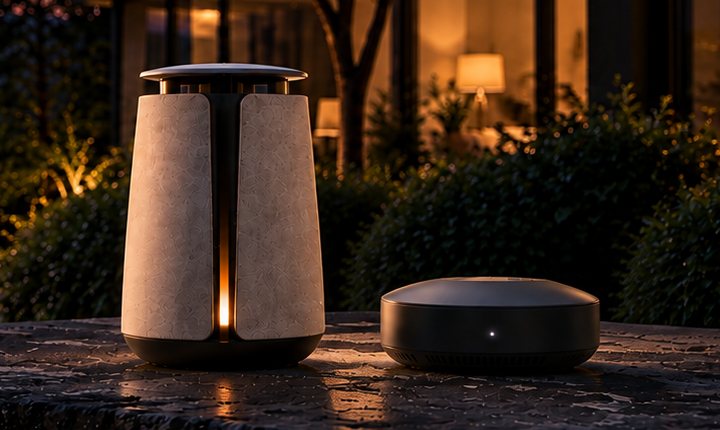
Measures fine particles, carbon dioxide, volatile compounds, nitrogen oxides, temperature, humidity and pressure in the room it sits in.
Measures the same particles and gases just outside, so every indoor change can be set against what the outdoor air was doing.
How it works
Sits in a room and measures the air you actually breathe: particles, carbon dioxide, gases, temperature and humidity.
A smaller sensor just outside the home, measuring the same things, so the outside air has a voice too.
Reads both together, learns what is normal for your home, and shows what changed and whether it is appearing indoors, outdoors, or both.
Comparing what is inside with what is outside, minute by minute, is what lets VANTIL show whether a change is appearing indoors, outdoors, or both. It does not identify the source. Every reading is checked before it is trusted.
What an explanation looks like
Illustrative example, not a live reading
Fine particles indoors rose to about three times this hour's normal, a few minutes after the outdoor reading rose. Outdoors moved first and indoors followed.
That is the shape of what VANTIL is built to say: what changed, how large it was against your home's own normal, and what the other sensor was doing at the time. It reports the timing. It does not say what caused either rise.
What it measures
The approach
Most monitors show a number and a colour. VANTIL is built to say why. It is also deliberately conservative: what it has noticed is kept separate from what it has proven, and it says plainly when it does not know yet.
Where it stands
VANTIL is being developed and tested in a home beside a major freeway in Southern California. The hardware is still prototype hardware and the learning system is still accumulating data.
Questions
Not yet. VANTIL is in development and is not available to buy today. There is no price, no pre-order list that reserves anything and no date. Leaving your details means we will write to you about progress and, when there is news, about availability.
No. VANTIL measures air and describes how it changes. It does not diagnose, treat or predict any health condition, and it should not replace advice from a clinician.
Readings go to a private analysis system that is not open to the public. This website collects only what you type into the form.
That is where the indoor versus outdoor question matters most, and it is where VANTIL is being developed. Traffic exhaust can reach indoor air through gaps and open windows, and an indoor monitor alone cannot show whether the outdoor air moved too.
The current prototype uses low-cost sensor modules, which are good at showing change over time and weaker at absolute values. That is why VANTIL compares each reading with its own baseline and checks sensor health continuously.
Early interest
Join the early interest list to follow development and be notified about future availability. We ask for no more than we need. See the privacy note.